
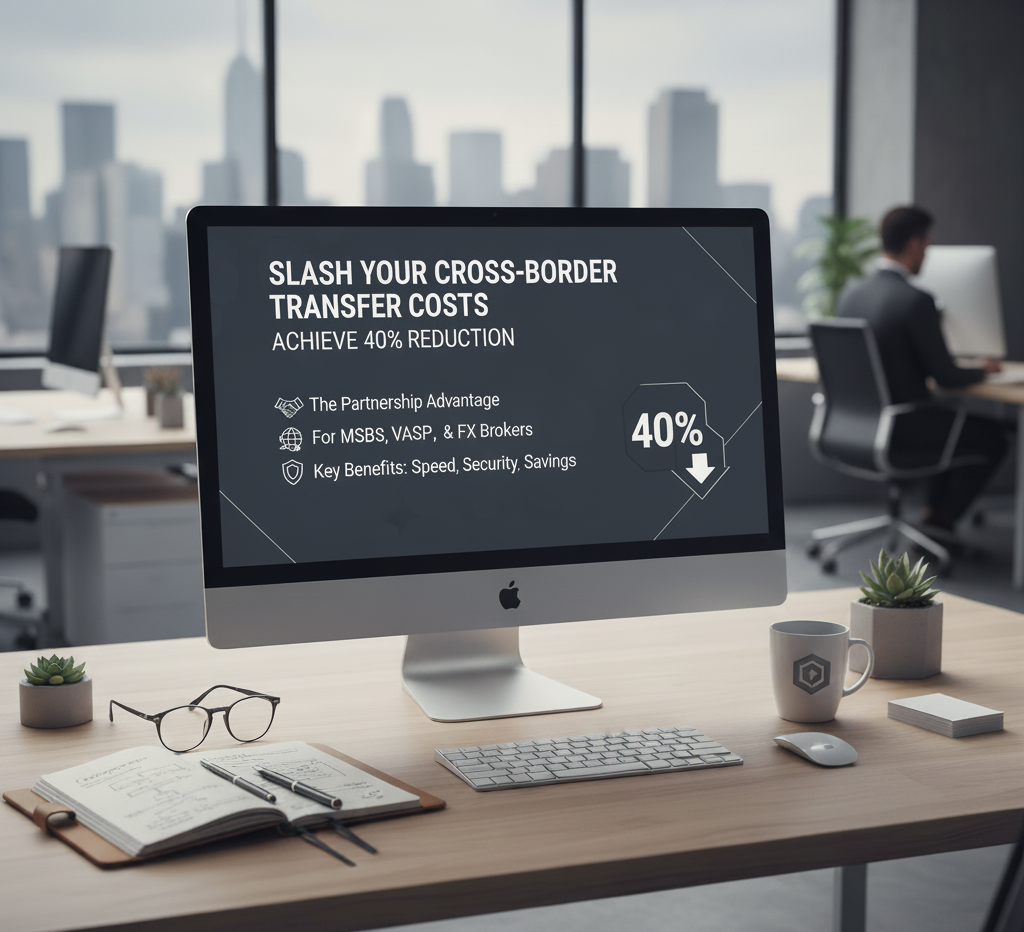
Why “cross-border transfer costs” are mostly design problems
If your cross-border transfer costs feel inevitable, here’s the good news: most of the bill comes from design choices—who you partner with, which rails you use in each corridor, and how your data flows reduce (or cause) friction.
The macro picture is changing fast. On the backbone, Swift shows ~90% of cross-border messages now reach the beneficiary bank within an hour—proof that the network can be fast; cost and delays increasingly hide in the last mile and in repairs caused by poor data. SwiftTreasury Today |
Meanwhile, the EU’s Instant Payments Regulation pushes euro instant credit transfers across the bloc, forcing PSPs to handle screening and liquidity at “instant” speed—great news if you design for it. European Central Bank
And the industry’s move to ISO 20022—with the MT/MX coexistence period ending 22 November 2025—means richer, structured data becomes standard. That’s your ticket to fewer repairs, cleaner sanctions decisions, and cheaper operations. Swift
Bottom line: your cost line depends on the partners you choose and the standards you embrace—not on luck.
Table of Contents
The cost stack you can actually control
Let’s name the layers that build up cross-border transfer costs. Keep this mental model handy; it’s the skeleton of every partnership conversation.
1) Rail & method fees. Swift gpi vs. local instant/ACH, vs. wallet/card hybrids. Each corridor has a different “cheapest reliable” route.
2) FX economics. Raw rate + mark-up + spread + slippage. The FX Global Code (Dec 2024 update) clarifies expectations on last-look and disclosures; aligning to it earns better quotes and fewer surprises. Global Foreign Exchange CommitteeFX Knowledge Hub
3) Rejects & repairs. Bad data = returns, investigations, and resends. ISO 20022 structure slashes these leakages. Swift
4) Investigation time. Every RFI, return, or “where’s my wire?” is hours you pay for—directly or via worse pricing later.
5) Compliance handling. Sanctions/TM false positives, Travel Rule exceptions, and documentation gaps all raise effective cost.
The prize is big. Globally, the average remittance cost still sits around 6.49%—clear headroom for smarter routing and partnerships to beat that in targeted lanes. Remittance Prices World Bank
Thirteen partnership plays that cut cross-border transfer costs (up to 40%)
Each play is a mini-brief: What to do → Why it works → What to show. Keep paragraphs tight; send the artifacts, not adjectives.
1) Route by corridor + use case, not by logo
What to do: For your top three lanes, compare Swift gpi → local instant/ACH → wallet/card hybrids. Pick the cheapest reliable path per lane—even if that means different partners.
Why it works: Cost and speed are corridor-specific; “one PSP for everything” is convenient, not efficient. G20 workstreams and CPMI/FSB emphasize competing routes, transparency, and data as levers for cost reduction.
What to show: A one-pager per lane with chosen route, expected latency, and fee stack; append last-month metrics. Financial Stability BoardBank for International Settlements
2) Exploit gpi for traceability—then fix the last mile
What to do: Use gpi for tracking and SLA pressure upstream, then swap to local instant/ACH where the last mile is cheaper and faster.
Why it works: Swift data proves backbone speed; most delay and extra cost hide after reach-beneficiary-bank.
What to show: gpi traces + “credit-availability” deltas vs. local instant; reject rates before/after. Swift
3) Make ISO 20022 your inside language, not just a gateway converter
What to do: Carry structured names/addresses, LEIs, and purpose codes end-to-end, not only at the edge.
Why it works: Repairs drop; sanctions/TM decisions are faster; ops time falls—your blended cost line follows.
What to show: Field mapping screenshots and before/after repair counts; note the 22 Nov 2025 deadline your partners respect. Swift
4) Use Instant Payments Regulation as a lever
What to do: In euro lanes, negotiate pricing that assumes instant settlement and your own screening latency targets.
Why it works: IPR turns “instant” into an expectation. Providers that truly meet it have lower exception costs; make them pass savings on.
What to show: P95/P99 latency charts and exception SLAs aligned to IPR pages. European Central Bank
5) Put your FX under the Global Code spotlight
What to do: Ask LPs/PSPs for time-stamped quotes, disclosed mark-ups, and last-look governance per the FX Global Code (Dec 2024).
Why it works: Transparency earns better pricing—and lets you route flow to the fairest desk.
What to show: A monthly FX quality report vs. public benchmarks with Code references. Global Foreign Exchange Committee
6) Design Travel Rule plumbing that prevents rework (VASPs)
What to do: Bind originator/beneficiary data to transfers, discover counterparties, transmit, and reconcile with SLAs.
Why it works: Exceptions are slow and costly; post-2025 transparency expectations raise the bar on clean data.
What to show: Weekly coverage by corridor and exception closure times (banks love this). Financial Stability Board
7) Co-create a micro-pilot with each partner
What to do: Two weeks, real traffic, small tickets. Measure latency, returns by code, investigation times, and FX variance.
Why it works: Proof compresses pricing discussions—and exposes cheap-looking routes that are expensive in practice.
What to show: A one-page “pilot brief” with live metrics.
8) Centralize returns intelligence
What to do: Classify returns into data quality vs. sanctions vs. liquidity vs. cut-off. Fix the top two causes per quarter with your partners.
Why it works: Returns are hidden cost. Fewer returns = fewer fees, less staff time, happier clients.
What to show: A “Top 5 return reasons” scoreboard with fixes shipped.
9) Pre-fund smart, not blind
What to do: Pre-fund only the lanes where instant/local rails truly cut total cost, and manage intraday buffers with alerts.
Why it works: Liquidity is not free; targeted buffers reduce reject fees and late-day premiums without idle cash drag.
What to show: Buffer math and month-over-month reject reduction.
10) Use performance-linked pricing
What to do: Offer fee reductions in exchange for your measured behavior (reject ratio below X%, no sanctions escalations for Y days).
Why it works: You monetize your operational excellence. Partners will cut rates if you remove their pain.
11) Standardize investigation evidence exports
What to do: From day one, require partners to export logs, reason codes, and timestamps on demand.
Why it works: Investigations are time sinks; standard exports end the email ping-pong that you end up paying for.
12) Make corridor fit a first-class selection criterion
What to do: For every lane, pick at least one partner with documented appetite and a demonstrable track record.
Why it works: Appetite reduces RFIs and “surprise” caps that push you to expensive routes mid-month.
What to show: Partner scorecards with latency, rejects, and SLA history.
13) Tie your narrative to global targets
What to do: Reference the G20 Roadmap and CPMI program in your board and partner packs to justify the investment in standards and partnerships.
Why it works: Everyone is reading the same targets: faster, cheaper, more transparent cross-border payments. You’re speaking their language.
What to show: A slide mapping your initiatives to the FSB progress report bullets. Financial Stability BoardBank for International Settlements
Your 45-minute cost audit (copy/paste)
Open a blank doc and answer these—honestly.
- Which three corridors account for 60–80% of your volume? For each, list today’s route (gpi vs. local instant vs. wallet/card) and a “Plan B.”
- What’s your blended cost per $/€1,000 in each, including FX mark-up, scheme/rail fees, investigation fees, and returns?
- How many returns did you have last month by corridor? Top three reason codes? What got fixed?
- What’s your P95/P99 latency per route? What fraction is “last-mile” vs. “reach beneficiary bank”? (gpi traces will tell you.) Swift
- Are you ISO 20022 end-to-end or only at the edge? Show a sample message with structured name/address and LEI. 22 Nov 2025 is not moving. Swift
- What’s your FX Code posture? Do you receive time-stamped quotes, mark-up disclosures, and last-look policies from LPs? Global Foreign Exchange Committee
- Euro lanes only: are you aligned to Instant Payments Regulation expectations on screening and exceptions? European Central Bank
If you can’t answer any one of these with artifacts, that’s where the money is leaking.
12-week partnership sprint to lock in the savings
Weeks 1–2 — Choose the lanes; define the math
Pick three corridors. Baseline: blended cost per $/€1,000; FX variance vs. benchmark; returns by reason; P95/P99 latency and gpi vs. last-mile split. Anchor your board narrative to FSB/CPMI goals so investment looks strategic, not tactical. Financial Stability BoardBank for International Settlements
Weeks 3–6 — Pilot + ISO + FX discipline
Run micro-pilots per lane with a settlement bank and a PSP. Carry ISO 20022 structure internally; fix the first two repair causes. Start an FX Global Code-style report: mark-ups disclosed, time-stamps, last-look policy. SwiftGlobal Foreign Exchange Committee
Weeks 7–9 — Instant readiness + returns intelligence
In euro lanes, align to IPR latency expectations and exception SLAs; tune pre-funding where it saves real money. Centralize returns intelligence; close the loop on data-quality errors that recur. European Central Bank
Weeks 10–12 — Lock pricing + publish the pack
Negotiate performance-linked fees; activate Plan-B rails; publish a one-page partner scorecard. Present a “before/after” to your board: blended cost ↓, returns ↓, latency ↓, FX transparency ↑. That’s your enduring 40%.
Case math: what 40% looks like in the real world
Imagine your EU→LatAm marketplace lane moves $20M/quarter. Today you use one global PSP with card-heavy settlement and a single bank payout route.
- Baseline blended cost: 2.2% FX mark-up + 0.45% schemes/rails + $60k/month investigations/returns.
- Design changes:
- gpi to partner bank + local instant/ACH payout last mile;
- ISO 20022 structured addresses + LEIs end-to-end;
- FX under the Global Code with time-stamped quotes;
- Returns intelligence fixes top two data errors. Swift+1Global Foreign Exchange Committee
After 90 days: FX mark-up 1.4% (-0.8% absolute), scheme/rail down to 0.30%, investigations/returns cut in half. Blended cost down ~38–42%, time-to-beneficiary improved, and fewer customer tickets. It’s not magic—it’s partnership choreography.
KPIs and evidence packs your bank and PSPs respect
- Blended cost per $/€1,000 moved by corridor and method—monthly.
- FX transparency report: achieved vs. benchmark, mark-ups, last-look policy (Code-aligned). Global Foreign Exchange Committee
- P95/P99 latency and reach-beneficiary-bank vs. last-mile split from gpi traces. Swift
- Returns dashboard with reason codes, fixes shipped, and month-over-month trend.
- ISO 20022 field-mapping excerpt and repair reductions. Swift
- IPR alignment sheet (euro lanes): screening latency and exception SLAs. European Central Bank
Package these into a printable index, and you’ll find pricing talks get shorter—and friendlier.
FAQs on cross-border transfer costs
Q1: Is 40% really achievable?
Not everywhere, not always. But in corridors where you can swap card-heavy last miles for local instant/ACH, clean up ISO data to reduce repairs, and enforce FX transparency, 20–40% blended cost reduction is common. The size of the prize varies by lane and your starting point—and the global averages show there’s headroom. Remittance Prices World Bank
Q2: Does speed always raise cost?
No. Swift data shows network speed is already high; the “expensive” part is often the last mile or the rework. Designing for instant in euro lanes under the IPR can be cheaper and faster when exceptions drop. SwiftEuropean Central Bank
Q3: Why obsess over ISO 20022?
Because messy data is expensive. Structured names/addresses and LEIs reduce screening friction and manual repairs—the hidden cost in many corridors. Also, the 22 Nov 2025 deadline is real, so partners are investing there anyway. Swift
Q4: What’s the point of citing the G20 Roadmap?
It frames your spend as aligned with global policy: faster, cheaper, more transparent cross-border payments. Boards and partners recognize that language. Financial Stability Board
Q5: How do we make FX fair?
Follow the FX Global Code: time-stamped quotes, disclosed mark-ups, last-look governance. Route flow to counterparties who honor it—your blended cost will reflect that discipline. Global Foreign Exchange Committee
Work with Pipworth Partners
At Pipworth Partners, we turn cross-border transfer costs into a controllable metric. We:
- Design corridor-true routes (gpi vs. local instant/ACH vs. wallet/card) backed by ISO 20022 structure and FX Global Code discipline.
- Introduce you to settlement banks, PSPs, and liquidity partners whose appetites fit your flows—and co-pilot micro-tests that generate proof and better pricing.
- Stay until the numbers move: fewer repairs, cleaner investigations, faster last miles, and a lower blended cost that sticks.
Meet us on About Us
Ready to brief your lanes? Contact Us
Explore more playbooks on News & Insights
When partners can see your standards, data discipline, and results, discounts follow—and cross-border transfer costs stop being a guessing game.